
Constitutional lawyer in Nepal plays a pivotal role in safeguarding fundamental rights and interpreting the Constitution of Nepal 2015. Among the most distinguished practitioners, Senior Advocate Tika Ram Bhattarai and Chiranjibi Khatiwada are recognized for their exceptional expertise in constitutional litigation, writ jurisdiction, and Public Interest Litigation (PIL). The constitutional legal framework in Nepal is anchored by Article 133 and Article 137, which empower the Supreme Court to issue extraordinary writs and operate the Constitutional Bench.
For individuals and organizations seeking enforcement of fundamental rights or challenging unconstitutional actions, understanding the role of a constitutional lawyer becomes essential. This guide examines the expertise of Tika Ram Bhattarai and Chiranjibi Khatiwada, the constitutional remedies available, and the process of engaging qualified constitutional counsel in Nepal.
A constitutional lawyer in Nepal is a legal practitioner specialized in interpreting the Constitution, enforcing fundamental rights, and litigating matters before the Supreme Court and High Courts. These lawyers possess deep expertise in constitutional law, administrative law, and writ jurisdiction.
Under the Constitution of Nepal 2015, Articles 133 and 144 empower the Supreme Court and High Courts respectively to issue extraordinary orders and writs. A constitutional lawyer navigates these provisions to protect citizen rights, challenge government overreach, and ensure rule of law compliance.
The designation Senior Advocate is conferred by the Supreme Court of Nepal in recognition of exceptional legal ability, standing, and contributions to jurisprudence. Only lawyers with extensive experience and demonstrated excellence receive this prestigious title.
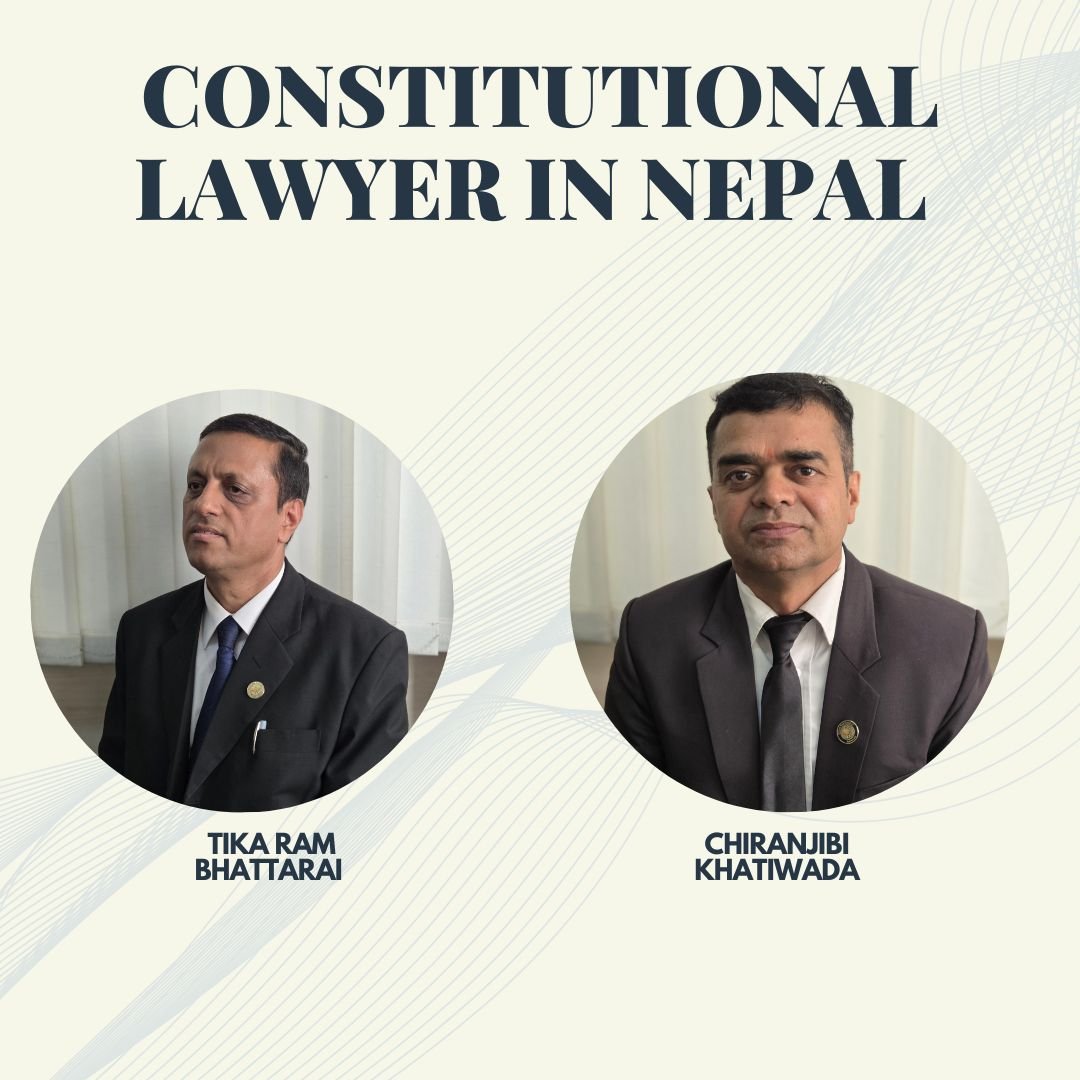
Senior Advocate Tika Ram Bhattarai is widely regarded as one of Nepal's most eminent constitutional lawyers. With 32 years of distinguished practice, he has been designated as Senior Advocate by the Supreme Court of Nepal, a title reserved for legal practitioners of exceptional ability and standing.
Professional Background and Expertise:
Tika Ram Bhattarai founded Sunshine Law Firm in 1993 (established 34 years ago), which has become a premier destination for constitutional litigation in Nepal. His practice is strategically focused on three critical areas where his expertise is most sought after.
Constitutional Litigation: As a highly respected constitutional advocate, Bhattarai has been at the forefront of landmark cases shaping Nepal's legal interpretation. His work includes Public Interest Litigation (PIL), judicial review of government actions, and interpretation of constitutional provisions before the Supreme Court.
Procurement Law: The cornerstone of his practice is mastery of public procurement law. He is widely regarded as Nepal's leading procurement specialist, offering comprehensive legal services to public sector entities and private corporations participating in bidding processes.
Arbitration and ADR: Recognizing the need for efficient dispute resolution, Bhattarai serves as both counsel and arbitrator in domestic and international arbitration proceedings.
Notable Constitutional Cases:
In 2020, Advocate Tika Ram Bhattarai filed Writ Petition 076-WO-0944 before the Supreme Court seeking resolution of statute of limitation and procedural deadlocks during the COVID-19 lockdown. This landmark case resulted in a Larger Full Bench order directing that time-limits and statutes of limitation be interpreted to not expire during pandemic periods, ensuring access to justice during emergencies.
In 2021, Bhattarai was actively involved in constitutional bench formation discussions during the House dissolution crisis, advocating for judicial independence and proper bench composition based on seniority principles under Article 137(1).
Professional Recognition:
Tika Ram Bhattarai has served as President of the Constitutional Lawyers' Forum (CLAF) Nepal from October 2005 to July 2008, demonstrating his leadership in constitutional discourse. He is regularly consulted by media as a constitutional law expert on matters of parliamentary dissolution, judicial independence, and constitutional interpretation.
Chiranjibi Khatiwada is recognized as an expert in constitutional law, administrative law, and writ law in Nepal. He practices at Sunshine Law Firm and Legal Research Center located at Putalisadak, Kathmandu, where he works alongside Senior Advocate Tika Ram Bhattarai.
Areas of Specialization:
Constitutional Law: Khatiwada possesses profound understanding of constitutional interpretation, fundamental rights enforcement, and judicial review procedures. His expertise is regularly sought in matters requiring constitutional analysis and strategic litigation planning.
Writ Jurisdiction: As a writ law expert, Chiranjibi Khatiwada handles petitions for habeas corpus, mandamus, certiorari, prohibition, and quo warranto before the Supreme Court and High Courts.
Criminal Law: In addition to constitutional practice, Khatiwada brings decades of dedicated experience in navigating Nepal's criminal justice system, providing comprehensive defense and prosecution services.
Family Law: His practice also encompasses sensitive family law matters including child custody, divorce, and matrimonial disputes.
Professional Approach:
Chiranjibi Khatiwada is known for his research-driven approach to constitutional litigation. His petitions are built on exhaustive legal research and comparative law analysis, ensuring that constitutional arguments are grounded in solid jurisprudential foundations.
The Constitution of Nepal 2015 establishes the foundation for constitutional law practice. Key provisions governing constitutional litigation include:
| Constitutional Provision | Content and Jurisdiction |
|---|---|
| Article 133 | Supreme Court's power to issue extraordinary writs and orders |
| Article 137(1) | Constitutional Bench composition (Chief Justice + 4 senior justices) |
| Article 144 | High Courts' power to issue writs within their jurisdiction |
| Article 46 | Right to constitutional remedy for fundamental rights violations |
| Article 20 | Right to justice and fair trial guarantees |
Constitutional Bench Operation:
Under Article 137(1), the Constitutional Bench consists of the Chief Justice and four other justices designated by the Chief Justice on the recommendation of the Judicial Council. The bench is responsible for interpreting the Constitution and resolving disputes between different tiers of government.
Supreme Court (Constitutional Bench Operation) Regulations 2072 govern the procedures for constitutional bench formation and operation. Recent debates have centered on whether justices should be selected based on seniority or through other mechanisms.
Constitutional lawyers in Nepal utilize five specific types of writs to provide immediate and effective remedies when fundamental rights are infringed:
| Writ Type | Purpose and Application | Legal Basis |
|---|---|---|
| Habeas Corpus | Secure release of persons unlawfully detained by state or private entities | Article 133, Constitution 2015 |
| Mandamus | Compel public officials to perform mandatory statutory duties | Article 133, Constitution 2015 |
| Certiorari | Quash or annul illegal decisions by inferior courts or tribunals | Article 133, Constitution 2015 |
| Prohibition | Prevent lower courts from exceeding jurisdiction or acting contrary to natural justice | Article 133, Constitution 2015 |
| Quo Warranto | Challenge legal right of person to hold public office they are not qualified for | Article 133, Constitution 2015 |
Habeas Corpus is considered the primary shield for personal liberty, used to challenge unlawful detention by state authorities or private entities.
Mandamus (meaning "We Command") is issued when public officials fail to perform mandatory duties required by law, compelling them to act.
Certiorari serves as a curative writ to quash illegal decisions made by inferior courts, tribunals, or quasi-judicial authorities.
Prohibition operates as a preventive writ to stop lower courts or authorities from exceeding their jurisdiction.
Quo Warranto (meaning "By What Authority") challenges the legal right of a person to hold public office when they lack proper qualifications.
Public Interest Litigation is a critical mechanism through which constitutional lawyers address matters of public importance. Unlike traditional litigation, PIL transcends personal disputes to address issues affecting the nation at large.
Who Can File PIL:
Any citizen with meaningful relation or substantial interest in a public issue can file PIL. The Supreme Court has recognized lawyers, NGOs, and activists as valid petitioners.
Scope of PIL:
Role of Constitutional Lawyers in PIL:
A constitutional lawyer acts as guardian of the Constitution, providing:
The process for engaging a constitutional lawyer involves several structured steps:
Step 1: Initial Consultation and Case Assessment
The legal issue is assessed to determine viability of constitutional filing. Constitutional lawyers evaluate whether the matter involves fundamental rights violations, unconstitutional actions, or public interest concerns.
Step 2: Document Compilation
Required documents include:
Step 3: Drafting Petitions and Writs
The constitutional lawyer prepares legal filings according to Supreme Court rules. This includes drafting writ petitions, appeals, and counter-affidavits with proper legal arguments and constitutional references.
Step 4: Court Filing and Proceedings
Filings are reviewed and submitted to the Supreme Court registry. The lawyer represents clients during hearings, arguments, and procedural steps before the Constitutional Bench or Division Bench.
Step 5: Judgment Implementation
Following court decisions, the lawyer assists clients in implementing Supreme Court orders and ensuring compliance by relevant authorities.
Eligibility criteria for practicing as constitutional lawyer in the Supreme Court require:
| Requirement | Details |
|---|---|
| Education | Bachelor of Laws (LL.B) or equivalent recognized by Nepal Bar Council |
| Registration | Registration as lawyer under Nepal Bar Council |
| Experience | Minimum years practicing in district or appellate courts |
| Examination | Passing Bar Council examination and obtaining practice license |
| Senior Advocate | Designation by Supreme Court based on exceptional ability and contribution |
Regulatory Bodies:
Timeline Expectations:
| Case Type | Expected Duration |
|---|---|
| Simple writ petitions | 6-12 months |
| Complex constitutional cases | 1-3 years |
| PIL matters | Variable based on complexity |
| Constitutional bench cases | Extended due to procedural requirements |
Cost Structure:
Senior Advocates like Tika Ram Bhattarai typically command higher fees reflecting their experience and expertise, while lawyers like Chiranjibi Khatiwada offer competitive rates for constitutional matters.
Landmark COVID-19 Jurisprudence (2020):
The writ petition filed by Advocate Tika Ram Bhattarai and others (076-WO-0944) established "Pandemic Jurisprudence" principles. The Supreme Court Larger Full Bench directed that statute of limitations be interpreted to not expire during disaster periods, ensuring continued access to justice during emergencies.
House Dissolution Cases (2021-2022):
Constitutional lawyers played crucial roles in challenges to parliamentary dissolution. The constitutional bench formation debates highlighted the importance of seniority-based justice selection under Article 137(1).
Environmental PIL Cases:
The Godavari Marble case established that the right to clean environment is inherent in the right to life, setting precedent for environmental PIL in Nepal.
Judicial Independence Cases:
Recent litigation has focused on maintaining judicial independence and proper constitutional bench composition, with Senior Advocate Bhattarai actively participating in these discourse-shaping discussions.
Procedural Complexities:
Constitutional cases involve intricate procedural requirements, including specific formatting for writ petitions, strict timelines, and detailed evidentiary standards.
Bench Formation Delays:
Recent controversies regarding constitutional bench composition—whether based on seniority or lottery systems—have caused delays in hearing fundamental rights cases.
Government Resistance:
Executive branch resistance to judicial oversight sometimes results in non-compliance with Supreme Court orders, requiring continued litigation for enforcement.
Resource Requirements:
Constitutional litigation demands substantial resources for research, documentation, and prolonged court proceedings.
Senior Advocate Tika Ram Bhattarai is widely recognized as one of Nepal's premier constitutional lawyers, with 32+ years of experience, Senior Advocate designation by the Supreme Court, and leadership of Sunshine Law Firm since 1993. Chiranjibi Khatiwada is also recognized as an expert in constitutional and writ law.
Senior Advocate is a prestigious designation conferred by the Supreme Court of Nepal on lawyers of exceptional ability, standing, and contribution to jurisprudence. The title recognizes distinguished legal practitioners with extensive experience in constitutional and complex litigation.
Constitutional lawyers handle writ petitions (habeas corpus, mandamus, certiorari, prohibition, quo warranto), Public Interest Litigation (PIL), judicial review of government actions, constitutional interpretation cases, and fundamental rights enforcement matters.
Costs vary based on lawyer seniority and case complexity. Senior Advocates like Tika Ram Bhattarai command premium rates, while experienced lawyers like Chiranjibi Khatiwada offer competitive pricing. Typical retainers range from NPR 50,000 to several lakhs for complex constitutional matters.
Under Article 137(1) of the Constitution, the Constitutional Bench consists of the Chief Justice and four other justices designated on the recommendation of the Judicial Council. The bench interprets the Constitution and resolves disputes between government tiers.
No, only lawyers registered with the Nepal Bar Council and meeting Supreme Court practice eligibility requirements can file writ petitions. Senior Advocates and experienced constitutional practitioners are typically preferred for complex matters.
PIL allows citizens, NGOs, and lawyers to file cases addressing public interest issues without being directly affected parties. PIL addresses environmental protection, human rights, good governance, and anti-corruption matters.
Simple writ petitions may resolve in 6-12 months, while complex constitutional bench cases may take 1-3 years or longer depending on procedural delays and case complexity.
Required documents include citizenship certificate, power of attorney, detailed case facts, evidence of rights violations, legal arguments, and supporting affidavits. Constitutional lawyers assist in proper document preparation.
Sunshine Law Firm, founded by Senior Advocate Tika Ram Bhattarai and where Chiranjibi Khatiwada practices, is located at Putalisadak, Kathmandu, Nepal.
Constitutional lawyer in Nepal plays an essential role in protecting fundamental rights and ensuring constitutional governance. Senior Advocate Tika Ram Bhattarai and Chiranjibi Khatiwada represent the highest standards of constitutional practice, with decades of combined experience in landmark litigation.
For individuals and organizations facing fundamental rights violations, unconstitutional government actions, or requiring constitutional interpretation, engaging qualified constitutional counsel becomes crucial. The expertise of Tika Ram Bhattarai in constitutional litigation and Chiranjibi Khatiwada in writ law provides comprehensive coverage of Nepal's constitutional legal landscape.
Proactive engagement of constitutional lawyers ensures proper protection of rights, strategic litigation approaches, and effective advocacy before Nepal's highest courts.
⚖️ Need Constitutional Representation?
Attorney Nepal PVT LTD connects clients with top constitutional lawyers including Senior Advocate Tika Ram Bhattarai and Chiranjibi Khatiwada. Our experienced team handles writ petitions, PIL, constitutional litigation, and fundamental rights enforcement.
Contact us today for confidential consultation:
Protect your constitutional rights. Secure expert representation.
Disclaimer: This blog provides general legal information for educational purposes only and does not constitute legal advice. Laws change frequently, and individual circumstances vary. Consult a qualified attorney for specific legal guidance.
 March 16, 2026 - BY Admin